
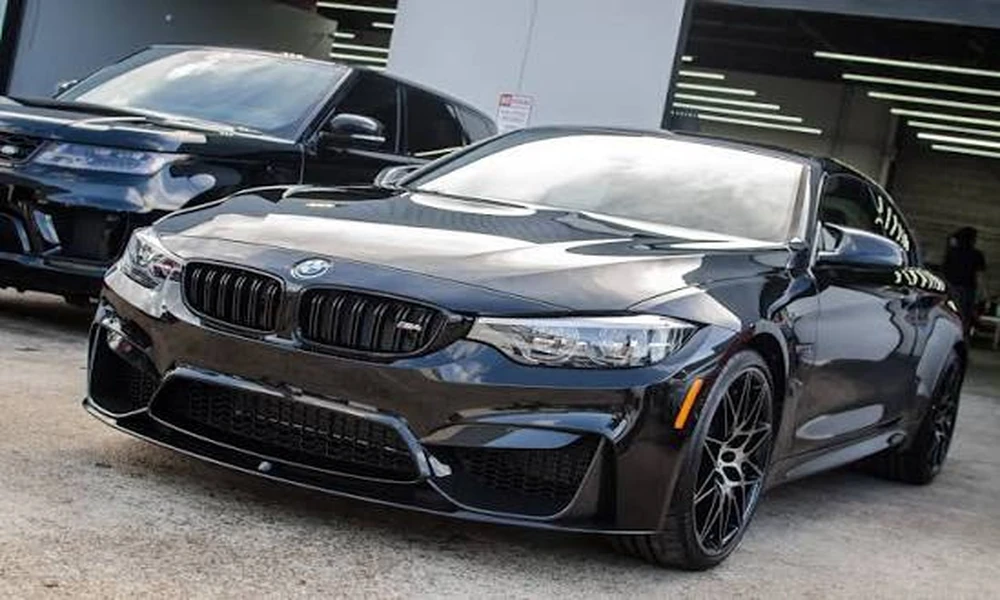
There’s a reason black remains one of the most requested paint colors at dealerships, even though it’s arguably the hardest color to keep looking good. It photographs beautifully, it suits almost any body style, and there’s something undeniably clean about a freshly detailed black car sitting in the sun. The catch is that black paint is unforgiving. Every swirl mark, water spot, and speck of dust shows up against it in a way that silver or gray paint simply hides.
That’s exactly why ceramic coating has become such a common topic among black car owners specifically. It’s not that the chemistry behaves differently on black paint than on any other color – it doesn’t – but the visual stakes are higher, so the expectations, the prep work, and the maintenance habits matter more.
Why Black Paint Shows Everything
Paint color affects how light interacts with a surface, and that has real consequences for how imperfections read to the eye. Lighter colors scatter light in a way that masks fine scratches and haze. Black paint does the opposite – it absorbs most of the light that hits it and reflects the rest almost like a mirror, which means any disruption in the clear coat’s surface, from a light wash-induced swirl to a water spot left to dry in the sun, becomes visible at almost any angle.
This is why black (and other dark, deep colors like navy or dark gray) tends to dominate detailing forums and before-and-after posts. It’s not that these cars get damaged more often. It’s that the damage is simply easier to see, which raises the bar for both the initial paint correction and whatever protection goes on afterward.
What Ceramic Coating Actually Is
Ceramic coating is a liquid polymer, typically based on silicon dioxide (SiO2) or, in some higher-end formulations, silicon carbide, that’s applied by hand and chemically bonds to a vehicle’s clear coat. Unlike wax or traditional paint sealant, which sit on top of the paint and wear off through friction and washing, a properly cured ceramic coating forms a semi-permanent layer that becomes part of the surface itself.
That bond is what gives ceramic coatings their two most talked-about properties: hydrophobicity and added surface hardness. Water beads and sheets off a coated surface instead of clinging to it, which reduces the number of water spots that form as it dries. And the coating adds a harder, more chemically resistant layer on top of the factory clear coat, which is where a lot of the “extra protection” reputation comes from.
It’s worth being precise about what “hardness” means here, because it gets oversold in marketing copy more than almost any other detailing claim. Coating hardness is typically evaluated using pencil hardness testing, a standardized method where pencils of graded lead hardness are dragged across a cured film to see at what point they mark or cut the surface – a method formalized in ASTM D3363, the industry standard for rating film hardness by pencil test. A coating rated at 9H on this scale is genuinely harder than bare clear coat, but that doesn’t make it scratch-proof. It reduces the likelihood of fine marring from improper washing, not impact from a rock chip or a keyed door panel.
The UV and Oxidation Angle
Black cars also tend to show oxidation and fading differently than lighter colors, since any dulling or hazing is immediately obvious against a dark, reflective surface. Ultraviolet radiation is a major driver of that breakdown. Prolonged UV exposure degrades polymers over time, causing the kind of chalking, discoloration, and gloss loss familiar to anyone whose car spends most of its life parked outdoors. The EPA’s UV Index tracks how much ultraviolet radiation reaches the ground at a given time and location, since seasonal shifts and atmospheric conditions change exposure levels throughout the year – useful context for owners in high-sun climates who are trying to understand why paint correction and reapplication schedules tend to be more aggressive in places like Florida, Arizona, or Southern California than in the Pacific Northwest.
Ceramic coatings add a UV-resistant layer that helps slow this process, which is genuinely useful for a color that shows early oxidation more readily than most. It’s a legitimate benefit, just not an indefinite one – no coating stops UV degradation entirely, it only extends the timeline.
What Ceramic Coating Won’t Do
This is the part that gets glossed over in a lot of sales conversations, and it matters more for black cars than almost any other color because expectations run high. Ceramic coating does not prevent rock chips, does not stop a shopping cart from denting a door, and does not make a car “scratch-proof” in any meaningful sense. It also doesn’t replace regular washing. Dirt, brake dust, and bird droppings still land on the surface and still need to be removed; the coating simply makes that removal easier and reduces the odds that a wash introduces new marring.
For black cars specifically, this means owners still need good washing technique – proper mitts, two-bucket methods, pH-neutral soap – because a coated black car with poor wash habits will still develop swirl marks over time. The coating buys some margin for error. It doesn’t eliminate the need for care.
Paint Correction Comes First
One detail that trips up a lot of first-time coating customers: a ceramic coating locks in whatever the paint looks like at the moment it’s applied. If there are existing swirl marks, light scratches, or oxidation, the coating seals them in rather than hiding them, and because black paint reveals those flaws so readily, skipping paint correction beforehand tends to produce visibly disappointing results. A proper installation typically starts with paint decontamination and machine polishing to correct surface defects, and only then moves to coating application. Reputable installers, including mobile operations like Vision Mobile Detailing, generally walk customers through this step rather than jumping straight to the coating itself, since it’s the difference between a coating that looks flawless and one that locks in imperfections for years.
Choosing an Installer
DIY ceramic coating kits exist and can work reasonably well on a budget, but professional application still tends to outperform them in a few specific ways: better surface prep, controlled application environments that keep dust and humidity out of the curing process, and access to professional-grade coatings with longer durability windows than most consumer kits offer. For a color where every flaw is visible, that gap in prep quality often shows up in the final result more than the coating product itself does.
If you’re comparing options, it’s worth asking any shop specifically how they handle paint correction on dark colors, what coating hardness rating they use, and what the expected maintenance wash interval looks like. A ceramic coating service built around proper decontamination and multi-stage correction will generally hold up better on black paint than a quick single-stage application, regardless of which coating brand ends up on the label.
The Bottom Line
Ceramic coating isn’t magic, and it isn’t a replacement for basic car care – but for black cars, which show every imperfection more readily than almost any other color, it’s a genuinely useful layer of protection when it’s paired with proper paint correction and realistic maintenance habits. Owners who go in understanding what the coating actually does, and what it doesn’t, tend to be a lot happier with the results a year or two down the road than those who treat it as a one-time fix-all.

Comments are closed.