
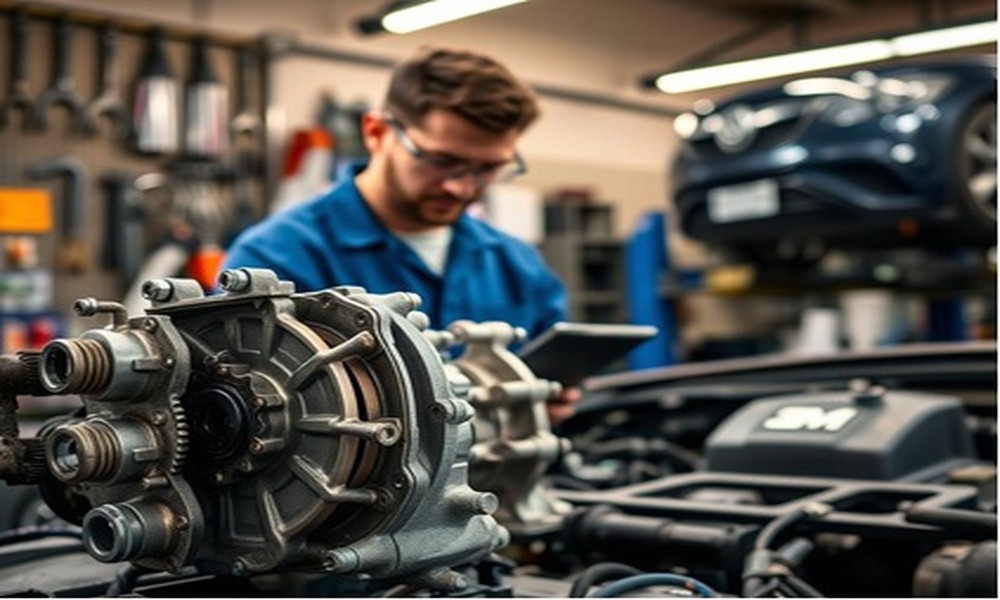
The car water pump is a small but vital part. It keeps the engine cool. Without it, the engine can overheat, causing damage.
The pump moves coolant through the engine. This keeps the engine at a safe temperature. If it fails, you might notice the engine running hotter, weak cabin heat, or a sweet smell.
This guide explains the signs of a failing water pump. You’ll learn about leaks, temperature changes, noises, steam, and corrosion. Knowing these signs can help prevent engine damage and save you money.
Key Takeaways
- The car’s water pump keeps coolant circulation moving to control engine temperature.
- Water pump symptoms can appear quickly, especially during hot weather or heavy traffic.
- Common failing water pump signs include leaks, rising temperatures, noises, steam, and corrosion.
- A weakened engine cooling system can lead to rapid overheating and serious engine damage.
- Early diagnosis is one of the best ways to prevent engine overheating and high repair costs.
- Understanding the warning signs helps you decide when to stop driving and get it checked.
Why the Water Pump Matters in the Engine Cooling System
The car’s water pump keeps coolant moving. This stops heat from building up in the engine. It’s key for keeping the engine cool, whether you’re stuck in traffic or driving on the highway.
Coolant flows in a loop. It goes from the radiator, through the engine, and back again. This keeps everything running smoothly.
Heater core coolant flow also plays a part. When you turn on the heater, hot coolant goes through a small radiator in the dashboard. Then, it goes back into the system.
Inside the pump, each part has a job. The impeller moves coolant. The bearing seal keeps everything in place. A worn seal can cause problems.
How the pump is driven is important too. Some use the serpentine belt, while others use a timing belt. This affects how fast coolant flows.
|
Cooling-system element |
What it does in radiator and engine circulation |
What tends to fail first |
What drivers often notice |
|
Impeller |
Pushes coolant through passages to keep the coolant flow path active |
Blade wear, cracking, or slipping on the shaft |
Temperature swings, weak cabin heat during heater core coolant flow demand |
|
Bearing and seal |
Keeps the shaft stable and coolant contained |
Impeller bearing seal wear, noisy bearing, seepage |
Whining or grinding from the front of the engine, dampness near the pump |
|
Housing and gasket |
Mounts the pump and seals it to the engine |
Gasket shrink, corrosion, or warping |
External drips, crusty residue around the mounting area |
|
Pulley and belt drive |
Transfers rotation from the belt to the pump |
Misalignment, belt wear, tension issues |
Squeal on startup, reduced flow at idle with a serpentine belt setup |
|
Timing cover area (belt-driven designs) |
Supports a timing belt driven water pump tucked behind covers |
Seal leak that spreads under the covers |
Coolant smell, unexplained loss with no obvious puddle |
Car Water Pump Warning Signs Drivers Commonly Notice
Most car water pump warning signs appear in small ways before they become big problems. Drivers often see changes on the dashboard, a new smell, or damp spots under the car. Catching these signs early helps avoid being stuck on the side of the road.
- Dash behavior that feels “off,” including temperature fluctuations and a temperature gauge high reading that comes and goes
- A fresh coolant puddle in front of the car, sometimes near the center line, with coolant that may look green, orange, pink, or red
- A new grinding whining noise from the front of the engine bay that rises and falls with RPM
- Steam under the hood after a hot run, especially when coolant hits warm parts and flashes to vapor
- Warning indicators, such as a coolant warning light that appears even if the engine feels “okay” for the moment
|
What you notice first |
What it often looks or sounds like |
Why it matters right away |
|
Temperature fluctuations |
The needle drifts up, settles, then climbs again, specially in traffic |
Uneven coolant flow can make heat build in pockets, stressing hoses and gaskets |
|
Temperature gauge high |
Runs higher than your normal baseline on hills, towing, or long idling |
Higher load needs steady circulation; weak flow can tip the engine into overheating |
|
Coolant puddle front of car |
Sweet smell and a wet patch near the front/center-front after parking |
Low coolant reduces heat control and can pull air into the system |
|
Grinding whining noise |
Whirring, squeal, or a rough bearing sound that changes with RPM |
Bearing or pulley wear can worsen fast and affect belt drive and circulation |
|
Steam under hood |
Visible vapor near the radiator area or around hot engine parts |
Steam can signal overheating or coolant contacting hot surfaces |
|
Coolant warning light |
Light comes on during stops, slow climbs, or after a warm restart |
It’s a prompt to reduce load and check levels before heat spikes further |
These symptoms can add up quickly. A small leak or a faint noise can turn into a bigger cooling loss, then overheating. If the dash starts acting strange, treat it as a time-sensitive change, not a “wait and see” issue.
Coolant Leaks and Drips That Point to a Failing Pump
A water pump coolant leak often shows up after you park. Look for a coolant puddle under car near the center-front area. It’s closer to the timing cover and front of the engine block than the radiator. On many vehicles in Australia, that spot is the first place a slow drip collects.
One common cause is a water pump gasket leak. As the gasket ages, it can flatten or crack. This lets coolant seep down the pump body. The drip may start as a damp edge, then turn into a steady trail that leaves dried residue around bolts and seams.
Leaks can also come from inside the pump. When the internal seal wears, a weep hole leak may appear. It shows as a few drops under the pump snout, then worsens over time. A cracked pump housing can mimic the same symptoms, showing more when the engine is hot.
Pay attention to what you see on the ground. Coolant colors green, orange, pink, and red can all be normal. This depends on what was used last, so color alone won’t confirm the brand or type. Even without a visible puddle, the level can fall if seepage hits hot surfaces and evaporates or if it leaks mostly while driving under pressure.
When the source isn’t obvious, a cooling system pressure test can help. It can reveal a slow seep at the pump gasket, a drip at the weep hole, or a fine spray from a hairline crack. This only shows under load.
|
What you notice |
Where it tends to appear |
What it can point to |
|
Coolant puddle under car after parking |
Center-front under the engine, near timing cover area |
Water pump gasket leak or a larger external water pump coolant leak |
|
Small, repeated drops with no big puddle |
Under the pump pulley area |
Weep hole leak from a weakening internal seal |
|
Crusty residue and damp tracks |
Around pump seams and mounting bolts |
Slow gasket seepage that spreads as it runs down the housing |
|
Coolant smell but little to see on the ground |
On hot engine surfaces near the pump |
Evaporating seepage that can be confirmed with a cooling system pressure test |
|
Wet spots matching coolant color green, orange, pink, red |
On splash shields or lower engine components |
Active leak that’s being carried by airflow while driving |
Overheating Symptoms That Should Never Be Ignored
When the engine overheats, the water pump can’t move coolant fast enough. This happens a lot in stop-and-go traffic, on long climbs, or while towing. In Australia’s summer, this extra load can cause trouble.
If the needle on the temperature gauge is higher than usual or keeps bouncing, it’s a warning. Seeing the temperature gauge in the red zone means damage can start in minutes. A coolant warning light can also mean the system is low, leaking, or not flowing properly.
Steam under the hood is another sign. It often shows up when you pull up at lights or park after driving hard. Steam can come from coolant dripping onto hot parts or from boiling coolant as pressure drops. Either way, it means temperatures are too high.
|
What you notice |
What it often points to |
Why it matters now |
|
Temperature gauge rising above normal, then dropping |
Coolant flow that comes and goes, often tied to pump speed |
Heat cycling can stress seals and gaskets, making failures more likely |
|
Temperature gauge red zone or a sudden spike during a hill climb |
Low coolant movement under load and higher engine heat output |
Fast overheating can lead to warped cylinder head and head gasket damage |
|
Coolant warning light with a sweet smell after stopping |
Coolant loss, trapped air, or poor circulation |
Low coolant can expose hot spots that crack metal over time |
|
Steam under hood near the radiator area |
Boiling coolant, leaks hitting hot components, or pressure release |
Severe heat events raise the risk of cracked cylinder head and burnt pistons |
If the gauge climbs, turn the cabin heater to max and the fan to high. This pulls heat away from the engine. Then pull over as soon as it’s safe and shut the engine off. Do not open the radiator cap, as pressurized coolant can spray and burn.
If the warning returns right away, arrange a tow instead of driving on. Repeated overheating can turn a small cooling issue into a ruined engine. This includes head gasket damage, a warped cylinder head, a cracked cylinder head, or burnt pistons.
Unusual Noises From the Front of the Engine Bay
Strange sounds up front often show up before a leak does. A water pump whining noise can have a smooth, harmonic tone. This tone rises and falls with engine RPM.
It may be louder on cold starts, then fade as parts warm up. Even so, the pitch usually tracks the throttle. This helps separate it from random rattles.
A sharp high-pitched squeal pulley can point to alignment trouble or a pulley that is starting to wobble. That wobble is one sign of water pump pulley failure. This is true, even if it happens right after a belt service or tension adjustment.
When the noise turns rough, listen for a grinding noise water pump bearing. That sound can come from worn rollers inside the pump. Here, friction builds as the bearing surface breaks down.
One quick clue is bearing play. With the engine off and cool, a pulley that rocks by hand can hint at internal wear. Even if it spins, it shows signs of wear.
|
Sound and feel |
What it often tracks |
What it can point to |
Why it matters |
|
Water pump whining noise that rises with RPM |
Changes with throttle, sometimes louder when cold |
Early bearing wear inside the pump |
Heat and friction can build fast as the bearing degrades |
|
High-pitched squeal pulley near the belt path |
May flare during startup or quick revs |
Water pump pulley failure or pulley misalignment |
A wobbling pulley can stress the belt and nearby accessories |
|
Grinding noise water pump bearing with a harsh, sandy tone |
Gets worse under load and with RPM |
Late-stage bearing damage |
The pump can seize without much warning |
|
Chirp or squeal that changes after spraying water on the belt |
Briefly quiets or shifts tone |
Serpentine belt noise vs water pump |
Belt slip can mimic pump issues, so it helps narrow the source |
If a belt-driven pump locks up, it can shred the belt. This upsets charging and cooling at the same time. On timing-belt-driven setups, a seized pump can also overload the timing belt. This is a bigger risk for interference engines.
Visible Rust, Corrosion, or Deposits Around the Pump Area
When you look under the hood, check the engine’s front near the belt drive. This is where water pump corrosion often starts. You might see rust on the pump housing or a dried coolant ring at the gasket line.
Staining can be white, orange, or green, depending on the coolant. These deposits can form around the pump and on the engine. Over time, they can harden and block flow.
Coolant condition is key. Bad coolant can cause impeller corrosion, weakening the pump. Acidic coolant can attack metal from the inside out.
Pressure issues can also be a sign. A failing pressure plug can lead to rust and reduced pump performance. For more clues, check this inspection checklist.
|
What you see near the pump |
What it can suggest |
Why it matters to cooling performance |
|
Orange streaks or flaking metal on the housing |
rust on water pump and advancing surface breakdown |
Rough surfaces can worsen sealing and promote ongoing water pump corrosion |
|
Chalky white crust around gasket edges or the weep hole |
coolant deposits from slow seepage and evaporation |
Residue can harden into mineral buildup that restricts local flow |
|
Brown sludge or gel-like residue inside the neck or near fittings |
contaminated coolant and additive drop-out |
Thicker fluid moves poorly and can raise system temps under load |
|
Pitted metal or worn vanes (when the pump is off) |
impeller corrosion linked to old coolant chemistry |
Lower pump output reduces circulation and can trigger overheating |
|
General dulling and etching of metal surfaces |
degraded coolant acidic conditions over time |
Accelerates internal wear across hoses, radiator, and pump surfaces |
Seal Failure, Weep Holes, and Damage on the Dry Side of the Pump
The water pump has a seal to keep coolant inside. When this seal fails, pumps have a weep hole to warn us. A few drops are okay at first, but steady dripping is a big warning.
But, some leaks don’t show up on the ground. They might evaporate on hot metal. This makes it hard to see the leak.
Look at the pump body and behind the pulley for signs. Over time, you might see stains or pitting. In bad cases, you’ll see holes or worn spots.
Cavitation is another problem. It happens when coolant flow is disrupted. This creates bubbles that can damage the pump.
|
What You Notice |
What It Often Means |
What to Check Next |
|
Steady wetness under the pump snout |
weep hole dripping that tracks with engine temperature |
Inspect the vent area with a light; look for fresh coolant traces after a drive |
|
Coolant level drops but no puddle |
Slow seepage masked by internal leak evaporation |
Check for dried residue on the pump and nearby timing cover; pressure test if needed |
|
Crusty deposits near the shaft area |
outer seal deterioration and early seal wear |
Look for streaking, staining, and residue patterns that start at the pump |
|
Pitting or pinholes on the back side of the housing |
dry side damage linked to long-term wear or corrosion |
Inspect with mirrors or from below; confirm the pump housing isn’t compromised |
|
Rough flow symptoms with no obvious hose issue |
coolant inlet bubbles and cavitation stress near the impeller |
Check coolant condition, proper fill level, and for signs of aeration in the system |
Seeing signs of seal failure or weep hole dripping means trouble. It can lead to bigger cooling issues. Catching it early helps avoid damage to hoses and the radiator.
Repair Timing and Prevention to Avoid Costly Engine Damage
When signs appear, it’s time to think about replacing the water pump. A weak pump can’t move coolant, leading to fast heat buildup. Driving a bit longer can turn a small fix into a big engine problem.
Overheating can cause huge costs. If the gauge gets too hot, it can damage the engine. This includes warping cylinder heads, blowing head gaskets, cracking blocks, or seizing pistons. Replacing the pump early can prevent these problems.
On many Australian vehicles, replacing the timing belt and water pump together is wise. This saves money because the labor is the same. It’s even more important for interference engines, where a bad pump can cause belt failure and piston damage.
Prevention is about regular habits and checks. Follow coolant flush intervals to avoid damage from old coolant. Good maintenance also means checking for coolant mix-ups, keeping belt tension right, and getting a pressure test when leaks are suspected.

Comments are closed.