
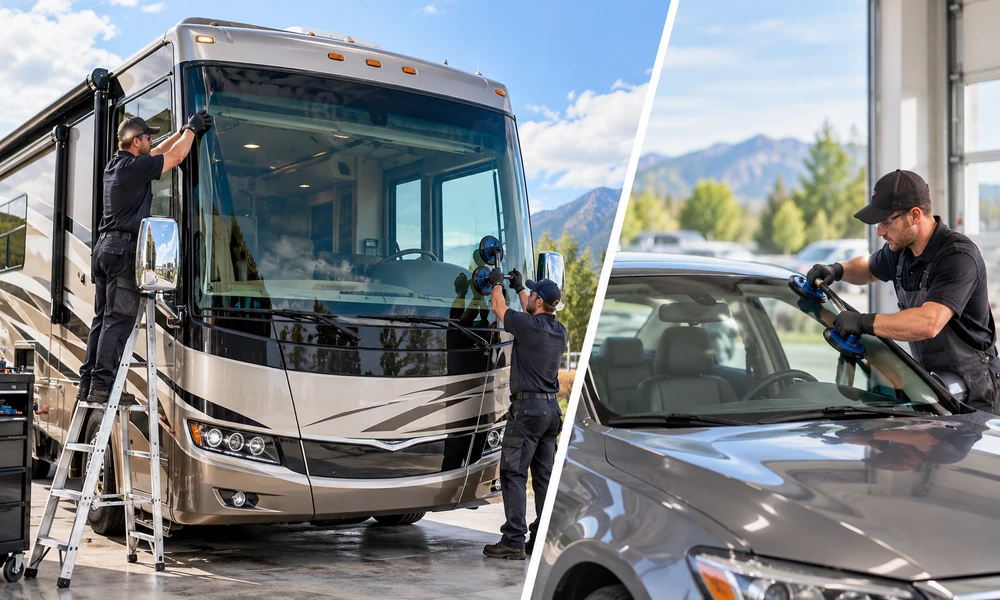
A small rock hitting your windshield can turn an ordinary drive into an expensive repair. For most car owners, getting the glass replaced is fairly straightforward. But when that same damage happens to a motorhome, the process can be considerably more complicated.
RV windshields are often larger, differently shaped, and installed using techniques that vary by motorhome manufacturer. Their size, construction, and the way the vehicle moves on the road can all influence the replacement process.
Understanding these differences can help RV owners make informed decisions, avoid unnecessary expenses, and choose the right professionals for the job.
1. RV Windshields Come in Different Sizes and Configurations
Unlike passenger vehicles, which typically use a single windshield designed for a specific make and model, motorhomes can have several different windshield configurations.
Class A motorhomes, for example, may feature one large panoramic windshield or a split windshield consisting of two separate glass panels. Class B camper vans often have windshields that resemble those of their underlying van chassis, while Class C motorhomes generally have a more conventional front-cab design.
These differences affect everything from glass availability to handling and installation.
A large, curved Class A windshield may require specialized equipment and additional technicians. Split windshields introduce another consideration: ensuring the replacement panel fits correctly alongside the existing glass and surrounding seals.
As a result, identifying the correct windshield before scheduling replacement is especially important.
2. Finding the Correct Replacement Glass Takes More Research
When replacing a car windshield, the vehicle identification number (VIN) often provides much of the information needed to identify the correct part.
With motorhomes, the process can involve additional details.
An RV’s chassis manufacturer may differ from the company that built the motorhome body. Some manufacturers also make changes to their windshield designs across different production years or model variations.
For example, two motorhomes from the same manufacturer may look similar but require different windshield glass.
To help a glass specialist identify the correct replacement, owners should have the following information available:
- Motorhome manufacturer and model
- Model year
- VIN and, where available, the coach serial number
- Whether the windshield is one-piece or split
- Photographs of the windshield and surrounding trim
Providing accurate information early can help prevent incorrect parts from being ordered and reduce scheduling delays.
3. Installation Requires Experience With Motorhome Construction
Proper windshield installation involves more than removing damaged glass and fitting a replacement.
The technician must account for the windshield’s shape, the surrounding frame, the vehicle’s construction, and the original mounting method.
Depending on the motorhome, the installation may involve adhesive bonding, rubber gaskets, moldings, or a combination of components.
Motorhomes also experience movement and vibration as they travel. Large vehicles can flex as they navigate uneven roads, steep driveways, and campground entrances. A correctly fitted windshield and properly maintained surrounding seals help accommodate the vehicle’s intended design.
Improper installation can lead to water leaks, wind noise, poor fitment, and potentially additional glass damage.
For this reason, motorhome owners should look for technicians who have experience with RV glass rather than assuming that every automotive glass shop handles large motorhomes.
Motorhome owners can explore RV windshield replacement services from RV Glass Guru for help with different motorhome types, including one-piece and split-windshield configurations.
4. Not Every Damaged Windshield Needs Replacement
A small chip doesn’t automatically mean an entire windshield must be replaced.
As with passenger vehicles, some minor RV windshield damage can be repaired using specialized resin. The technician evaluates the size, location, depth, and type of damage before recommending repair or replacement.
Small chips away from the driver’s primary field of vision may be suitable for repair, depending on their condition.
However, replacement is more likely to be necessary when:
- A crack is long or continues spreading
- Damage reaches the windshield’s edge
- Multiple cracks affect the glass
- The driver’s visibility is compromised
- The damage is too deep or extensive for a reliable repair
Delaying an inspection may make the situation worse. Temperature changes, road vibration, and continued driving can contribute to crack growth.
Owners should have damaged glass professionally assessed rather than relying on a universal rule about crack length.
5. Mobile Replacement Can Be Convenient, but Location Matters
Many RV owners keep their motorhomes in storage facilities, RV parks, or private driveways. Transporting a large vehicle to an automotive glass shop isn’t always convenient.
Mobile windshield replacement can be a practical alternative.
However, working on a motorhome requires adequate space and suitable conditions. A technician may need room for equipment, safe access around the front of the vehicle, and a reasonably level working surface.
Weather conditions can also affect whether installation can proceed as planned.
Before scheduling mobile service, RV owners should confirm that the location is accessible and appropriate for the particular windshield replacement.
In some cases, an in-shop appointment may be the better option, especially when additional work or specialized equipment is required.
6. Safety Systems and Adhesive Curing Shouldn’t Be Overlooked
Some newer motorhomes and their underlying vehicle platforms include cameras or driver-assistance features associated with the windshield.
If a windshield-mounted camera is disturbed during replacement, recalibration may be required according to the vehicle manufacturer’s procedures.
Owners should ask their installer whether their specific motorhome has equipment that needs additional attention.
Another important consideration is adhesive curing.
For windshields installed using automotive adhesives, the bonding material needs sufficient time to develop the strength required for safe driving.
The minimum safe drive-away time depends on factors such as the adhesive system, temperature, and humidity. It should never be assumed that every motorhome will be ready to drive immediately after installation.
Follow the technician’s instructions before returning the vehicle to the road.
7. Insurance Coverage Can Make a Significant Difference
Replacing a large motorhome windshield can be considerably more expensive than replacing the glass on a typical passenger car.
The final cost depends on factors such as the windshield’s size, availability, installation complexity, and whether additional seals or moldings are required.
Before paying out of pocket, RV owners should review their insurance coverage.
Comprehensive insurance may cover windshield damage, but deductibles, exclusions, and glass-specific benefits vary by policy and state.
Owners should confirm their coverage with their insurer and compare any deductible with the estimated replacement cost.
It’s also worth asking the glass provider whether assistance with the claims process is available.
Choosing the Right RV Windshield Replacement Service
Finding the right technician is just as important as obtaining the correct glass.
Before booking an appointment, ask whether the provider has experience with your motorhome type, how replacement glass will be identified, whether mobile service is available, and what installation procedures and warranties apply.
If the motorhome includes windshield-mounted safety equipment, confirm how any required recalibration will be addressed.
A properly planned installation can help avoid delays, reduce the risk of leaks or fitment problems, and get the vehicle back on the road safely.
Final Thoughts
RV windshield replacement isn’t simply an oversized version of an ordinary car windshield installation. Motorhome construction, glass configurations, specialized handling, and proper sealing all make the process more involved.
Whether you’re dealing with a small chip or a large crack, taking the time to identify the correct glass and choose an experienced installer can make a substantial difference.
For motorhome owners, the best approach is straightforward: address windshield damage early, understand your options, and prioritize a safe, properly completed installation over the fastest or cheapest available solution.

Comments are closed.