
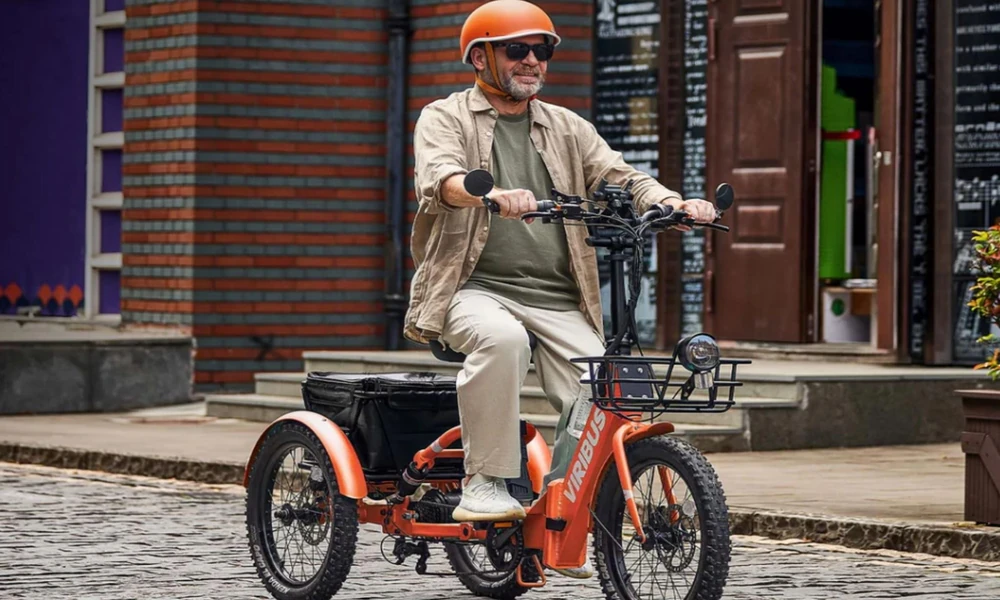
Electric tricycle shopping tends to start with wattage. How powerful is the motor? How big is the battery? How fast does it go? Those numbers matter, but they are not the numbers that determine whether an e-trike becomes a daily habit or a garage ornament. The question that actually predicts satisfaction is simpler and harder: where will this trike live, and what will it be asked to do?
An electric tricycle for adults can be a commuter vehicle, a grocery hauler, a campground companion, or a mobility aid with assistance. Those are different jobs, and they reward different designs. A trike optimized for tight urban storage is not the same trike optimized for gravel roads and camping gear. A trike that needs to fit in an elevator is not the same trike that needs to carry a week of supplies. Spec sheets flatten those differences into a single table. Real ownership does not.
Take folding. A folding e-trike is the right answer for a rider who lives in an apartment, needs to fit the trike into a car trunk, or stores it in a small garage alongside a car. The fold is not a gimmick; it is the feature that makes the vehicle compatible with the rider’s actual space. But folding adds complexity and weight. A non-folding trike at the same price point will often have a sturdier frame, a simpler hinge-free structure, and more capacity for the same money. If storage is not a constraint, the fold may be paying for flexibility you never use.
Fat tires are a different kind of answer. They are not about speed or range. They are about surface and confidence. A fat-tire e-trike handles gravel, packed dirt, grass, and uneven pavement in a way that narrower tires do not, and the visual width of the tire itself reduces the mental load of riding on imperfect ground. That matters for camping, for riders who live on unpaved roads, and for anyone who wants a trike that feels planted rather than precise. The trade-off is weight and rolling resistance. A fat-tire trike is heavier to pedal without assistance and slower to accelerate. If the riding is mostly smooth pavement, the fat tires are mostly extra mass.
Then there is the commuter/errand category, which is the least dramatic and probably the most common. These trikes prioritize a low step-through frame, an upright riding position, a rear basket sized for real groceries, and a motor that is strong enough for a hill but not so strong that it changes the character of the ride. They are not designed to be exciting. They are designed to replace short car trips, and that is a more ambitious goal than it sounds.

The adult tricycles and e-trikes that work best over time are the ones that match one of these jobs clearly, rather than trying to be all three at once. A trike that tries to be a folding fat-tire commuter usually ends up heavy, expensive, and compromised in each role. A trike that picks a lane-literal or figurative-tends to be better at that lane than a generalist is at anything. The full Viribus tricycle range is useful to browse precisely because it separates these use cases instead of pretending one model covers all of them.
Before comparing wattage, decide which question you are actually asking. Is this a storage problem? A terrain problem? A cargo problem? Or a “replace the car for trips under three miles” problem? The answer will narrow the field faster than any spec comparison, and it will point to a trike that gets used rather than a trike that gets researched.

Comments are closed.