
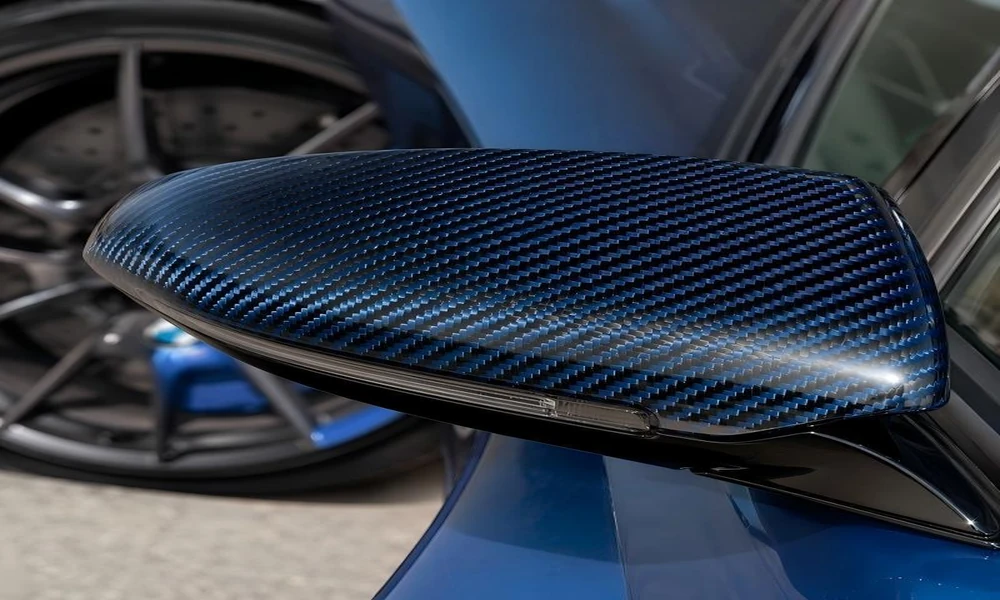
Some of these parts will look right forever. Some already do not.
Car styling has a graveyard, and it is full of once-hot trends: chrome everything, giant wings on economy cars, underglow. Carbon fiber has been ‘in’ for thirty years now, but inside the carbon world, individual styles rise and fall on the same cycle as everything else. If you are bolting parts to a car you plan to keep, the question worth asking is not what looks current. It is what will still look intentional in ten years.
The Styles That Never Age
Start with the safe money. A clean 2×2 twill weave under quality gloss clear coat has looked exactly right since the 1990s and shows no sign of stopping. It reads as what it is: engineering made visible. Matte finishes on track-oriented builds age equally well, because they reference function. A matte splitter looks like it has a job. The timeless styles share one trait: they are honest about the material. Nothing about them pretends to be anything other than carbon fiber doing its work.
The Styles on Thin Ice
Colored tinted resins and wild hybrid weaves occupy riskier ground. A deep red-tinted weave can look spectacular on the right car in the right year. And like a dated custom shop experiment a decade later. This is not an argument against them. It is an argument for knowing what you are buying: a style statement with a shelf life, purchased for joy now rather than approval later. The carbon fiber color guide shows the full range; the trendy end of it should be bought with eyes open and zero regrets.
Forged carbon sits in an interesting middle position. It arrived as a novelty, was rapidly everywhere, and has settled into a legitimate second language for the material. Its saving grace is that every piece is genuinely unique. And uniqueness ages better than fashion, because it was never following a crowd to begin with. The forged carbon story is worth knowing before you decide which side of that bet you are on.
What Actually Makes a Style Date
Styles age badly when they reference a moment instead of a function. Overly large weaves chosen for shock value, extreme tints chosen for Instagram contrast, finishes mixed without a system. These say ‘2020s build’ the way chrome spinners say ‘2000s build’. Styles age well when they reference the car itself: finishes matched to the paint, weave scaled to the panel, parts chosen for the zones where they make sense. The difference is not taste. It is whether the decision was about the material or about the moment.
The Resale Angle
There is a financial shadow to style choice. Timeless spec, classic twill, quality gloss, mainstream parts, has a deep secondhand market, because the next buyer’s taste does not need to match yours. Trendy spec narrows the market to people who share the moment you bought into. Carbon parts hold value unusually well as a category, but within the category, restraint retains value the way restraint always does. Buy the wild style because you love it, not because you expect the next owner to.
The OEM Gravity
One more force decides what ages well: what the factories do. Styles endorsed by manufacturers gain a permanence that pure aftermarket trends lack. Factory gloss carbon on two decades of M cars and AMGs is why gloss twill reads as ‘correct’ rather than ‘dated.’ When a finish becomes the OEM default, it graduates from fashion to vocabulary. Watching what the factories specify, not what the shows display, is the most reliable ten-year forecast the style question has.
The Ten-Year Test
Before buying, run one mental exercise: picture the car in a photo dated ten years from now. Gloss twill hood? Still fine. It is the navy blazer of the car world. Matte aero on a track build? Still fine, function never dates. Bright tinted weave on every panel? That depends entirely on your tolerance for owning a period piece. And period pieces are only a mistake when they were bought by accident.
Building for the Long Game
- Anchor the build in classic weave and one finish family. Timeless base, always.
- Put the trendy choices on small, cheap, swappable parts. Mirror caps, interior trim, not hoods.
- Buy quality construction above all: a dated style in perfect condition reads as character, while any style in failed clear coat reads as neglect.
- Keep the car’s era in mind. Carbon on a classic wants restraint; carbon on a modern platform can carry more experimentation.
The best-dressed carbon cars of the last thirty years share a secret: they were never chasing the trend of their year. They were chasing the material at its most honest. And honesty, it turns out, is the only style that has never once gone out of fashion.

Comments are closed.