
Most drivers ask this question right after seeing the price. You hand over your keys, get back a car that looks better than the day you bought it, and then wonder whether the result was worth what you paid. It’s a fair thing to question. Detailing isn’t a fixed-price commodity like an oil change, and the range you’ll see quoted can feel confusing.
So let’s skip the sales pitch and look at what you’re actually buying, what it tends to cost, and when the spend makes sense versus when a bucket and a free Saturday would do the job just as well.
Detailing Isn’t the Same as a Car Wash
The first source of confusion is the word itself. A car wash removes surface dirt. Detailing is a deeper restoration of both the exterior and interior, done largely by hand, with the goal of getting a vehicle as close to its original condition as the materials allow.
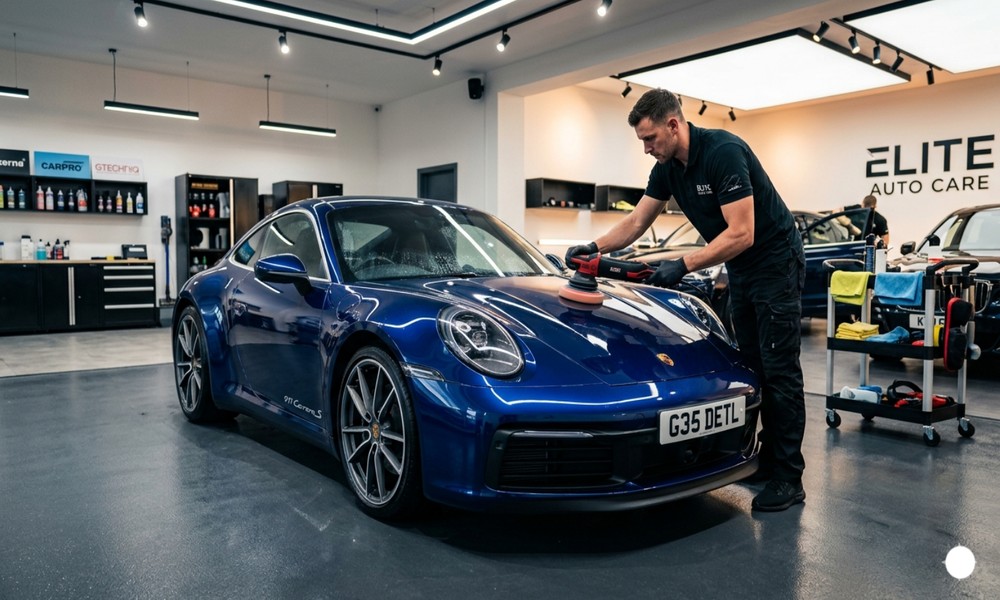
On the outside, that can mean a clay bar treatment to lift bonded contaminants the soap leaves behind, machine polishing to reduce swirl marks, and a protective layer such as wax, a sealant, or a longer-lasting ceramic coating. On the inside, it usually involves vacuuming, steam cleaning, shampooing upholstery and carpets, conditioning leather, and treating the dashboard, vents, and door panels.
The distinction matters because it explains the cost. You aren’t paying for soap and water. You’re paying for labor, technique, and time.
The Honest Cost Breakdown
Prices vary by region, vehicle size, and the condition you’re starting from. A neglected SUV with pet hair and ground-in dirt takes far longer than a lightly used sedan. With that caveat, here are the ballpark figures you’ll encounter in most markets:
- Basic exterior or interior package: roughly $50 to $125. Think a solid wash, wax, vacuum, and wipe-down. Good for routine upkeep.
- Full interior and exterior detail: roughly $150 to $300 for most cars, more for large or heavily soiled vehicles. This is the comprehensive clean most people picture.
- Paint correction: roughly $300 to $1,000+. This is skilled, multi-stage machine work to remove scratches and oxidation, and it’s priced accordingly.
- Ceramic coating: roughly $500 to $2,000+, depending on the product, number of layers, and prep work involved.
The spread is wide because the work isn’t standardized. The detailing industry is, as the International Detailing Association notes, largely unregulated, with no federal licensing requirements. That means quality and pricing depend heavily on the individual operator, which is exactly why understanding what’s included matters more than chasing the lowest number.
What You’re Actually Paying For
A full detail can take a single technician three to six hours of focused work. Paint correction can stretch across a full day. When you break the price down by the hour, the labor rate is often modest for skilled manual work.
You’re also paying for materials that aren’t cheap at professional grade, the equipment most people don’t own, like dual-action polishers, extractors, and steamers, and the judgment to know which products and pads suit your specific paint and trim. A detailer who picks the wrong compound can do real damage. Experience is part of the price, and it’s the part that’s hardest to see on an invoice.
When the Spend Is Genuinely Worth It
Detailing earns its cost in a few clear situations:
You’re selling or returning the car. A clean, well-presented vehicle photographs better and signals that it was cared for. Buyers notice, and the cost of a detail is small next to the difference it can make in negotiation. The same logic applies to lease returns, where a thorough cleaning can help you avoid wear-and-tear charges.
You plan to keep the car for years. Protective work like a quality sealant or ceramic coating slows down paint oxidation and makes routine washing easier. Spread across a long ownership period, prevention is usually cheaper than correction.
The interior has a problem you can’t fix. Pet hair, spilled coffee, smoke odor, or allergens often need extraction equipment and steam to remove properly. This is where a professional clean clearly outperforms a home effort.
Your time is genuinely scarce. A proper detail is hours of work. If those hours are worth more to you elsewhere, outsourcing is a reasonable trade.
When You Can Probably Skip It
Honesty cuts both ways. If your car is newer, garage-kept, and you wash it regularly, a full professional detail may be overkill. A maintenance wash and the occasional wax can keep a well-treated vehicle looking sharp for far less money. Paying for paint correction on a car with no real defects is spending on a problem you don’t have.
There’s also a middle path worth knowing about: mobile services that come to your home or office. Skipping the drive and the wait removes the main inconvenience of the traditional shop model, and providers like Cargo Detailing have built their approach around that convenience without sacrificing the depth of the work.
DIY Versus Hiring a Pro
A capable owner with the right products can handle washing, waxing, and basic interior cleaning at home, and there’s satisfaction in doing it well. The honest limits show up with the technical tasks. Machine polishing carries a real risk of burning through paint if you’re inexperienced, and a botched ceramic coating application can leave streaks that have to be sanded out.
There’s an environmental angle too. The U.S. Environmental Protection Agency classifies untreated car-wash runoff as a pollutant because detergents, oils, and road grime flow from driveways into storm drains and waterways. Professional operations are generally set up to capture or properly dispose of that water, which a driveway wash usually isn’t.
The practical rule: do the routine, lower-risk work yourself, and bring in a professional for paint correction, coatings, and deep restoration where the margin for error is thin.
How to Choose a Detailer Without Overpaying
Because the field is unregulated, a little vetting protects your wallet:
- Ask exactly what’s included. A clear, itemized scope tells you more than the headline price. Vague packages are where unpleasant surprises live.
- Look for relevant training or certification. Credentials from a recognized body signal that someone took the craft seriously, even if they aren’t legally required.
- Read recent reviews with photos. Before-and-after images from real customers reveal the quality of the actual work, not just the customer service.
- Match the service to your goal. If you want a clean car for a sale, you don’t need a full coating package. Booking a focused, well-scoped comprehensive detailing service tailored to what your vehicle actually needs keeps you from paying for extras that don’t move the needle.
The Bottom Line
Professional detailing is worth it when it solves a problem you can’t easily solve yourself, protects a car you intend to keep, or improves what you’ll get when you sell. It’s less compelling when your vehicle is already in good shape and you have the time and inclination to maintain it.
The smartest approach isn’t “always pay” or “always DIY.” It’s matching the level of service to your situation, understanding what each tier of work involves, and treating the price as the cost of skilled labor and protection rather than a luxury splurge. Seen that way, the question stops being whether detailing is worth it in general, and becomes whether this detail, on this car, at this moment, makes sense for you.

Comments are closed.